Architecture of Cloudsuo
Overview of the core architecture components of Cloudsuo.
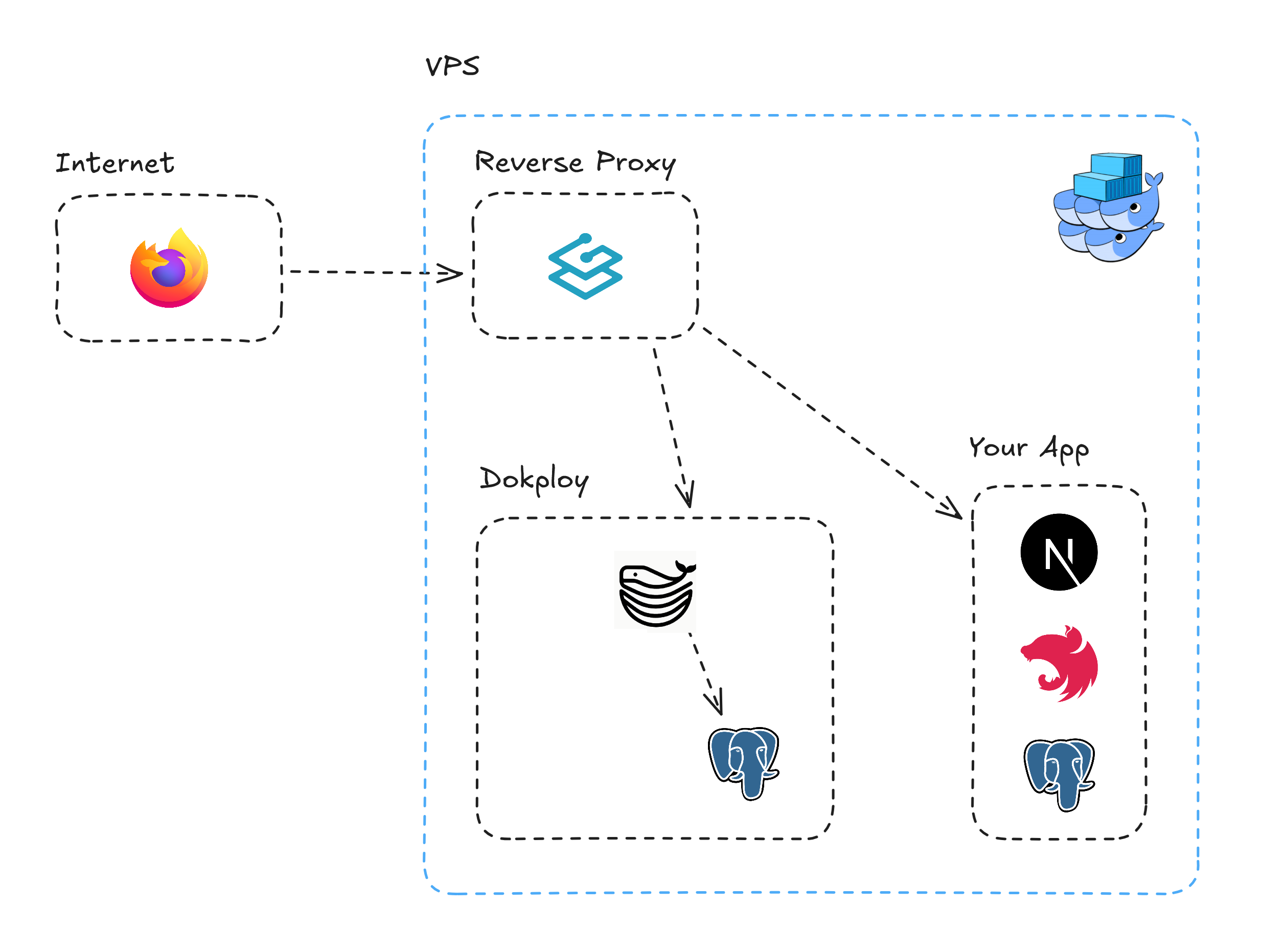
Understanding the architecture of Cloudsuo is crucial for both deploying and scaling applications. Below is a diagram illustrating the core components:
Installation Process
When Cloudsuo is installed, it automatically sets up the following components:
- Next.js Application: Serves as the frontend interface. Utilizing Next.js allows for an integrated server-side rendering experience, streamlining the UI and backend into a single cohesive application.
- PostgreSQL Database: Acts as the primary database for Cloudsuo, chosen for its robustness and widespread adoption. It stores all the configuration and operational data.
- Traefik: Used as a reverse proxy and load balancer. Traefik facilitates dynamic routing and service discovery which simplifies the configuration process by allowing declarative setup through the UI.
Purpose and Functionality
Each component in the Cloudsuo architecture plays a vital role:
- Next.js: Provides a scalable and easy-to-manage frontend framework, encapsulating both server and client-side logic in one platform. This simplifies deployment and development workflows.
- PostgreSQL: Delivers reliable and secure data storage capabilities. Its use within Cloudsuo ensures consistency and high performance for all database operations.
- Traefik: Enhances Docker integration. Its ability to read from and write to Docker configurations declaratively allows Cloudsuo to automate and streamline network traffic management and service discovery.
This structure ensures that Cloudsuo is not only efficient in deploying applications but also robust in handling traffic and data at scale.